
Island Peak Climbing
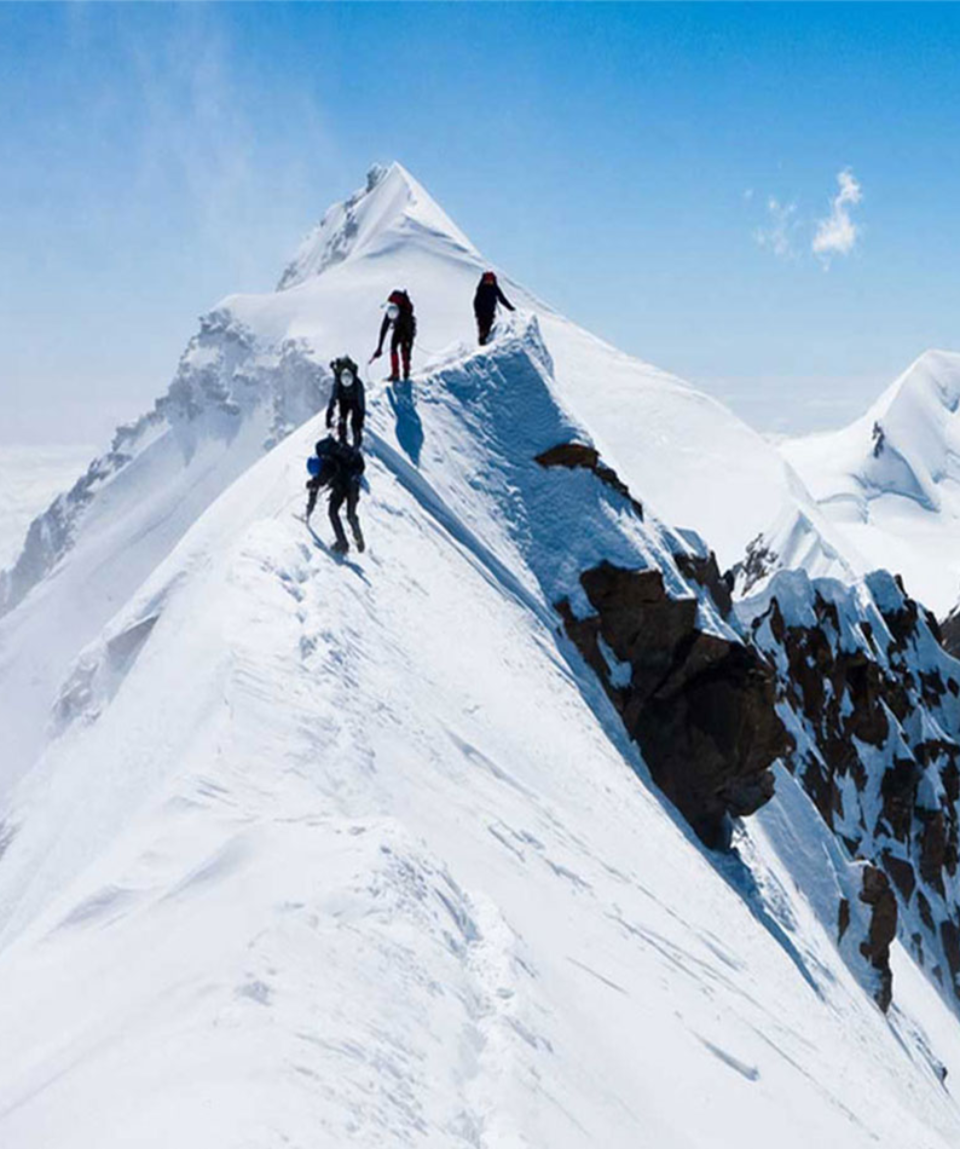
Table of Contents
Island Peak Climbing
Island Peak, also known as Imja Tse, is a popular trekking peak located in the Khumbu region of Nepal. Island Peak climbing offers an exciting and challenging mountaineering experience combined with stunning views of the Everest region. It lies between the Lhotse and Imja glaciers and is a prominent peak visible from the popular Everest BaseCamp Trek. It requires basic mountaineering skills and previous high-altitude trekking experience which is considered a moderate-to-challenging climb. The climb involves using ropes, crampons, and ice axes to navigate the glacier, steep sections, and a summit ridge. Island Peak stands at an elevation of 6,189 meters (20,305 feet), making it one of the most accessible trekking peaks in Nepal. However, it still requires properacclimatization and preparation for the high-altitude environment.
Summit of Island Peak offers breathtaking panoramic views of iconic Himalayan peaks, including Everest, Lhotse, Nuptse, and Ama Dablam among others. The typical duration for an Island Peak climbing expedition is around 16-20 days, including acclimatization and trekking to base camp. The itinerary usually incorporates trekking to Everest Base Camp and Kala Patthar for acclimatization and proper altitude adaptation. Island Peak climbing is a thrilling adventure that allows trekkers to experience the thrill of mountaineering in the Everest region. It requires proper planning, preparation, and a sense of adventure. The reward of standing atop Island Peak and witnessing the majestic Himalayan panorama is an experience that remains etched in the memory of
Climber for lifetimes.
Major Highlights of the Island Peak Climbing
The Island Peak climbing expedition in Nepal offers several major highlights that make it a memorable and rewarding adventure. Here are some of the key highlights of Island Peak climbing:
Stunning Himalayan Views
The climb to Island Peak provides breathtaking panoramic views of some of the world's highest peaks, including Everest, Lhotse, Nuptse, Ama Dablam, and many more. Witnessing these majestic mountains from the summit of Island Peak is an awe-inspiring experience.
Combination of Trekking and Climbing
Island Peak climbing incorporates a trekking component, allowing climbers to explore the scenic Everest region. The trek includes visiting iconic landmarks such as Everest Base Camp and Kala Patthar, offering an up-close view of the Everest massif.
Technical Challenge
Island Peak is considered a moderately challenging peak, making it an ideal choice for climbers seeking a step up from trekking to more technical mountaineering. The climb involves using mountaineering equipment like ropes, crampons, and ice axes, and navigating through glaciers and steep sections.
Cultural Immersion
The Island Peak climbing expedition passes through traditional Sherpa villages, providing opportunities for cultural immersion. Interacting with the local Sherpa community, experiencing their warm hospitality, and witnessing their unique way of life adds a cultural dimension to the adventure.
Summit Achievement
Reaching the summit of Island Peak at an altitude of 6,189 meters (20,305 feet) is a significant accomplishment for climbers. Standing on the summit and taking in the breathtaking views is a moment of triumph and a personal milestone.
Adventure in a Pristine Environment
The climb takes place in the pristine and awe-inspiring landscape of the Everest region. Trekkers and climbers get to experience the rugged beauty of the Himalayas, glacial moraines, and serene alpine lakes, immersing themselves in the raw and untouched wilderness.
Personal Growth and Challenge
Island Peak climbing requires physical endurance, mental strength, and determination. It pushes climbers outside their comfort zones, allowing them to develop resilience, perseverance, and self-belief. Overcoming challenges during the climb fosters personal growth and a sense of achievement.
Island Peak climbing offers a unique blend of adventure, natural beauty, cultural immersion, and personal accomplishment. It is a challenging yet achievable endeavor that provides a remarkable experience and lifelong memories for those who undertake the expedition.
Island Peak Climbing Itinerary
Here is a sample itinerary of 16 days from arrival to departure date for the Island Peak climbing expedition:
Day 1: Arrival in Kathmandu
Arrive in Kathmandu, meet with your climbing guide, and complete
necessary permit formalities. Overnight stay in Kathmandu.
Day 2: Fly to Lukla (2,840 meters/9,317 feet) and
Trek to Phakding (2,610 meters/8,562 feet)
Take an early morning flight to Lukla and begin trekking
towards Phakding.
Overnight stay in Phakding.
Day 3: Trek to Namche Bazaar (3,440 meters/11,286 feet)
Continue trekking along the Dudh Koshi River, cross suspension
bridges, and ascend to Namche Bazaar. Overnight stay in Namche Bazaar.
Day 4: Acclimatization Day in Namche Bazaar
Acclimatization day in Namche Bazaar. Hike to Everest View Hotel
for panoramic mountain views or explore the Sherpa Culture Museum.
Overnight stay in Namche Bazaar.
Day 5: Trek to Tengboche (3,860 meters/12,664 feet)
Trek through rhododendron forests and reach Tengboche,
where you can visit Tengboche Monastery.
Overnight stay in Tengboche.
Day 6: Trek to Dingboche (4,410 meters/14,468 feet)
Continue the trek through lush forests and cross the Imja Khola.
Reach Dingboche, a village with beautiful mountain views.
Overnight stay in Dingboche.
Day 7: Acclimatization Day in Dingboche
Acclimatization day in Dingboche. Hike to Nagarjun Hill or
Chhukung Ri for acclimatization and enjoy the panoramic
views of the surrounding peaks. Overnight stay in Dingboche.
Day 8: Trek to Island Peak Base Camp (5,200 meters/17,060 feet)
Trek towards Island Peak Base Camp, passing through scenic landscapes
and the Lhotse glacier. Reach the Base Camp and prepare for
the climb. Overnight stay at Island Peak Base Camp.
Day 9: Rest and Training Day at Base Camp
Rest day at Base Camp for acclimatization and training. Your climbing guide
will provide instructions on climbing techniques and
the use of mountaineering equipment. Overnight stay at Island Peak Base Camp.
Day 10: Climb to High Camp (5,600 meters/18,373 feet)
Ascend from Base Camp to High Camp, which involves steep sections
and glacier travel. Set up camp at High Camp and rest for the
summit push. Overnight stay at High Camp.
Day 11: Summit Day (6,189 meters/20,305 feet) and Descend to Chhukung
(4,730 meters/15,518 feet)
Start early in the morning for the summit push to Island Peak.
Climb steep sections and negotiate the glacier to reach the summit.
Enjoy the breathtaking views and descend back to Chhukung.
Overnight stay in Chhukung.
Day 12: Reserve Day for Contingencies
This day serves as a reserve day to accommodate any unforeseen
circumstances like adverse weather conditions or delayed summit attempts.
Day 13: Trek back to Namche Bazaar
Descend from Chhukung to Namche Bazaar, passing through scenic
landscapes and Sherpa villages.
Overnight stay in Namche Bazaar.
Day 14: Trek to Lukla
Continue descending to Lukla, marking the final leg of the trek.
Celebrate the successful climb with the team. Overnight stay in Lukla.
Day 15: Fly back to Kathmandu
Take a morning flight from Lukla to Kathmandu.
Upon arrival, you can rest
and explore the vibrant city of Kathmandu.
Overnight stay in Kathmandu.
Day 16: Departure from Kathmandu
Depart from Kathmandu or extend your stay to explore more of Nepal's
cultural and natural attractions.
Please note that this itinerary is a general guideline and can be customized according to your preferences and the recommendations of your climbing guide.
Difficulties during the Island Peak Climbing
Difficulties during climbing Iceland's peaks can be a challenging and rewarding experience. Here are some difficulties you may encounter during Iceland peak climbing:
Weather Conditions
Iceland's weather is notorious for its unpredictability and rapid changes. Storms, high winds, fog, rain, and snow can occur at any time, even during summer months. The challenging weather conditions can make climbing more difficult and potentially dangerous.
Remote and Isolated Terrain
Many of Iceland's peaks are located in remote and isolated areas with limited infrastructure and access. You may have to hike long distances or navigate challenging terrain to reach the base of the mountains. The lack of nearby services and support can increase the difficulty level of the climb.
Technical Challenges
Depending on the peak you choose, you might encounter technical climbing challenges, including steep ascents, loose rocks, glaciers, crevasses, and icy conditions. Proper mountaineering skills and equipment, such as ice axes, crampons, ropes, and harnesses, may be necessary for certain climbs.
Limited Daylight Hours
Iceland experiences long, dark winters with limited daylight hours. During this time, it can be challenging to plan and execute climbs due to the shorter daylight window. You need to carefully manage your time and make necessary adjustments to your itinerary.
Volcanic Activity
Iceland is known for its volcanic activity, and some peaks are located in volcanic regions. Active volcanoes or geothermal activity can pose additional risks, such as potential gas emissions, unstable ground, or volcanic ash affecting visibility and air quality.
Navigation and Route Finding
Iceland's mountainous terrain often lacks established trails and can be challenging to navigate. Proper map reading, GPS navigation, and compass skills are crucial to staying on the correct route, especially in areas with limited visibility or snow cover.
Limited Rescue Services
In remote areas, rescue services may be limited or require significant time to reach you in case of emergencies or accidents. It's important to have the necessary skills, equipment, and contingency plans to handle potential emergencies or unexpected situations.
To mitigate these difficulties, it's crucial to be well-prepared, physically fit, and have appropriate mountaineering experience and equipment. It's advisable to research your chosen peak thoroughly, check weather conditions, and consult with local experts or experienced climbers before attempting any climbs in Iceland.
Some Frequently Asked Question about Island Peak Climbing
Is Island Peak hard to climb?
Climbing Iceland Peak is not easy but you can make it easier by spending more days on the trek in and on the mountain. You need to acclimatize to the lower levels of oxygen lower down on the trial. According to the data, majority of the people attempting the climb are not reaching to the summit of the Island Peak.
Can a beginner climb Island Peak?
For Island Peak Climb, we don’t need technical skills where even beginner with physical fit climber can reach to the summit.
How long does it take to climb the Island Peak?
The Island Peak expedition is a minimum 19 days including arrival days to departure days. From base to island summit, it takes nearly 7-8 hours.
How much does it cost to climb the island Peak?
It depends upon the agency through you are going. Usually it costs 2500 USD per person for 20 days itinerary.
Which is harder Mera Peak or Island Peak?
Mera Peak is harder than the trek into Island Peak with more elevation gain up and down on the trial. The lodges and facilities are more basic than the Everest Base Camp.
What experience do you need for island Peak?
Firstly you need to be physically fit and energetic and later on have some experience climbing with ice axe and crampons to climb island. Similarly you need to be familiar with rappelling, abseiling and general rope skills.
Conclusion
In conclusion, Iceland peak climbing can be a challenging but exhilarating adventure. The country's stunning natural landscapes, remote terrain, and unpredictable weather conditions make it an exciting destination for mountaineers. However, there are several difficulties to consider, including harsh weather, remote locations, technical challenges, limited daylight hours, volcanic activity, navigation issues, and limited rescue services.
Despite the challenges, conquering Iceland's peaks offers a sense of accomplishment and the opportunity to witness breathtaking views of the country's unique landscapes. With careful planning, physical fitness, and a respect for nature, Iceland peak climbing can be a memorable and rewarding experience for those seeking adventure in the mountains.

